



BIM Meaning: What it is and How it's Revolutionizizing Construction
The construction sector is undergoing a profound change. What used to be based on 2D drawings and fragmented communication is now evolving into intelligent models that allow you to design, plan, and manage projects from start to finish. That change has a name: BIM.
In this article, we’ll explore the meaning of BIM, how it works, and why it has become the key methodology for those seeking greater efficiency and fewer errors in their projects.
What is BIM?
Definition of BIM (Building Information Modeling)
BIM stands for Building Information Modeling. It’s not just software, but rather a methodology that integrates 3D digital models with detailed information about materials, costs, schedules, and maintenance.
What Does BIM Mean in Spanish?
In Spanish, BIM translates as Modelado de Información de Construcción. In other words, it’s a way to centralize in a single model all relevant project information, from the design phase to operation.
Origin and Evolution of the BIM Concept
Although the idea emerged in the 1970s, the concept gained traction in the 2000s, when software and cloud technology made collaborative work possible. Today, BIM methodology is an international standard in architecture, engineering, and infrastructure projects.
What is BIM for in construction?
Intelligent 3D Design and Modeling
BIM allows you to create accurate 3D models that include not only the geometry, but also the technical information of each element: materials, resistance, lifespan and more.
Project Lifecycle Management
From planning to maintenance, BIM covers the entire project lifecycle. This means the same model can be used to build, operate and even plan future renovations.
Collaboration Across Teams and Disciplines
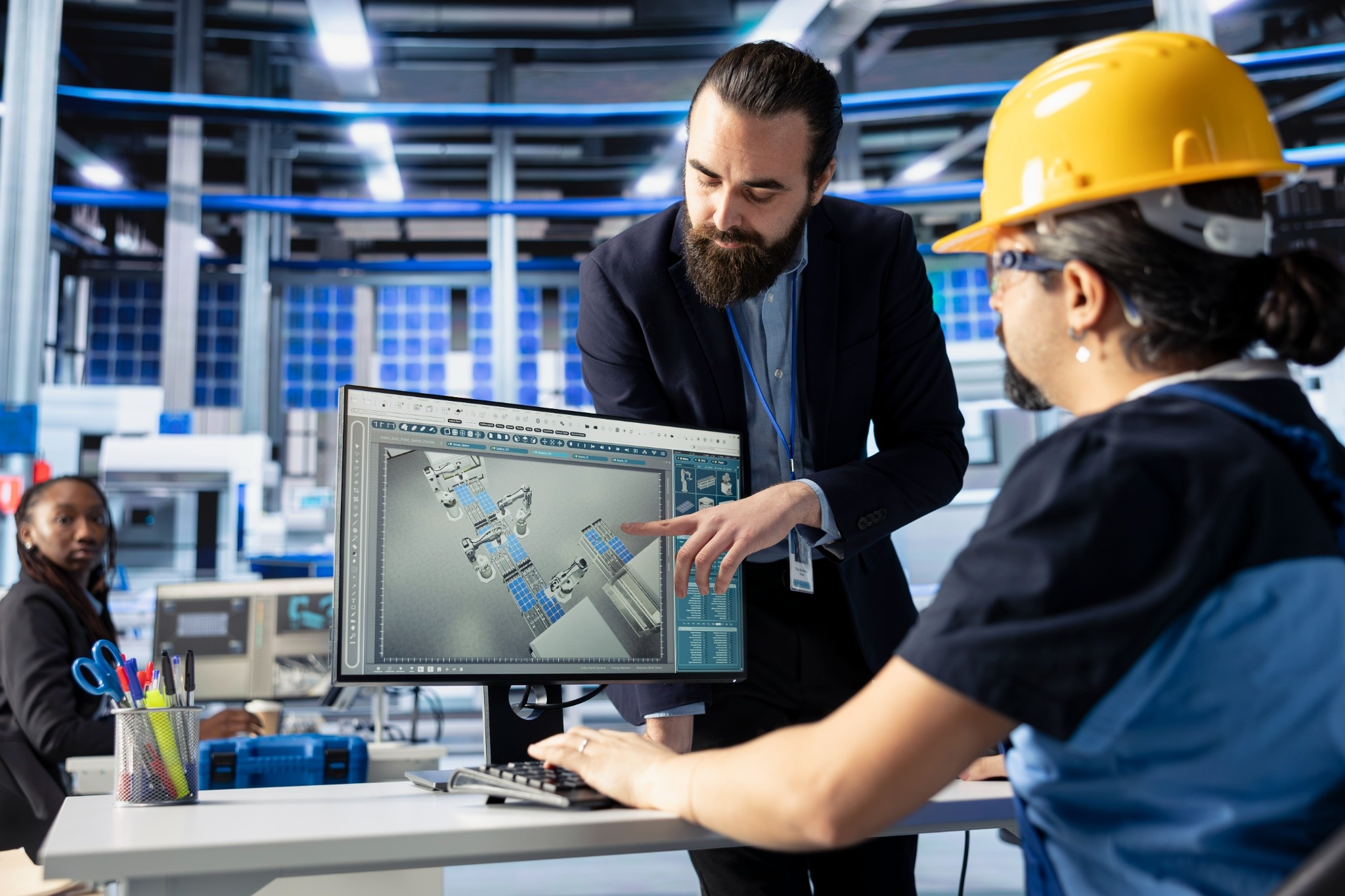
Engineers, architects, contractors, and clients can work on the same model in real time. This ability reduces misunderstandings and facilitates shared decision-making.
Advantages of BIM Over Traditional Methods
Error and rework reduction
With BIM, common construction errors can be anticipated and minimized, avoiding delays and unnecessary costs.
Greater cost and time efficiency
By simulating processes and detecting conflicts before construction, projects move forward with fewer surprises. BIM is part of the digitalization process and can be complemented with construction automation to maximize cost and time efficiency.
Better communication with clients and contractors
Collaborative BIM modeling also strengthens client relationships in construction projects, thanks to transparent information and the ability to visually show how the project will look before it starts.
BIM Dimensions and Their Applications
3D: Modeling
The heart of BIM: the three-dimensional representation of the project with all its technical information. Platforms like Buildpeer add key value by allowing you to store and view 3D files (.rvt, .skp and other formats), ensuring that every digital drawing looks as it should in each phase of the project. This feature enhances coordination between disciplines and provides precision to project management on site.
4D: Time
Links the 3D model with the project schedule, simulating phases and timelines.
5D: Costs
Integrates budgets and financial control directly into the model, enabling real-time expense tracking.
6D: Sustainability
Includes information on energy efficiency and the project’s environmental impact.
7D: Operation and maintenance
The model becomes an asset management tool, useful for owners even after project delivery.
BIM is not just a 3D model, but a shift towards construction technology that drives innovation at every stage of the project.
Examples of BIM Projects
BIM in Building Design: One World Trade Center
One of the most emblematic projects that implemented BIM was the One World Trade Center in New York. This skyscraper is not only an architectural marvel, but also an example of how BIM helps coordinate thousands of details among architects, engineers and contractors. Thanks to 3D modeling and methodology integration, construction precision in construction and team communication were significantly improved.
BIM in infrastructure: Barajas Airport, Madrid
The Adolfo Suárez Airport in Madrid used BIM during its expansion, which allowed for better planning and execution. With BIM, work teams could predict potential conflicts before they happened, improving quality and reducing costs.
BIM in the Construction Phase: Oslo University Hospital
This hospital, one of the largest in Norway, used BIM to design its facilities and ensure that every component fit perfectly during construction. The methodology made it possible to manage over 50,000 different elements efficiently, reducing construction time and increasing coordination among teams.
Conclusion
Talking about BIM means talking about a before and after in construction. This methodology not only provides a more detailed 3D model, but also transforms the way projects are designed, built, and managed.
And when combined with platforms like Buildpeer, the leap is even greater: you don't just centralize project management and documentation, but you also gain 3D visualization of drawings in formats like .rvt or .skp, a feautre that connects design with real project management.
The future of construction is already here, and it's called BIM + digital management.
Ready to take your project to the next level? Integrates BIM methodology with project management in one place and improve efficiency, collaboration and control at every stage of construction.
Schedule a free demo with Buildpeer today and discover how we can help you transform the way you manage your projects.
BIM FAQs
What does BIM stand for?
BIM stands for Building Information Modeling.
What's the difference between CAD and BIM?
CAD focuses on 2D or 3D technical drawings, while BIM includes comprehensive information (costs, schedules, materials, sustainability) within the model.
What is the relationship between Revit and BIM?
Revit is a software that allows you to apply the BIM methodology, but BIM is not limited to a tool: it is a complete approach to work.
How do I start a project with BIM methodology?
The first step is to train your team and define an implementation plan. Then, choose compatible software and establish collaborative workflows that centralize information.




.svg)
.png)


