




Building construction and civil works are two key concepts within the construction industry, but they have significant differences. In this article, we explain what each one is, their characteristics, the types of projects they include, the regulations that govern them, and how they differ from each other.
What is Building Construction?
Building construction refers to the development of structures intended to provide habitable space or a specific use. It includes residential, educational, healthcare, commercial, and industrial buildings. Its primary objective is to create spaces where people can live, work, or access services.
Key Characteristics of Building Projects
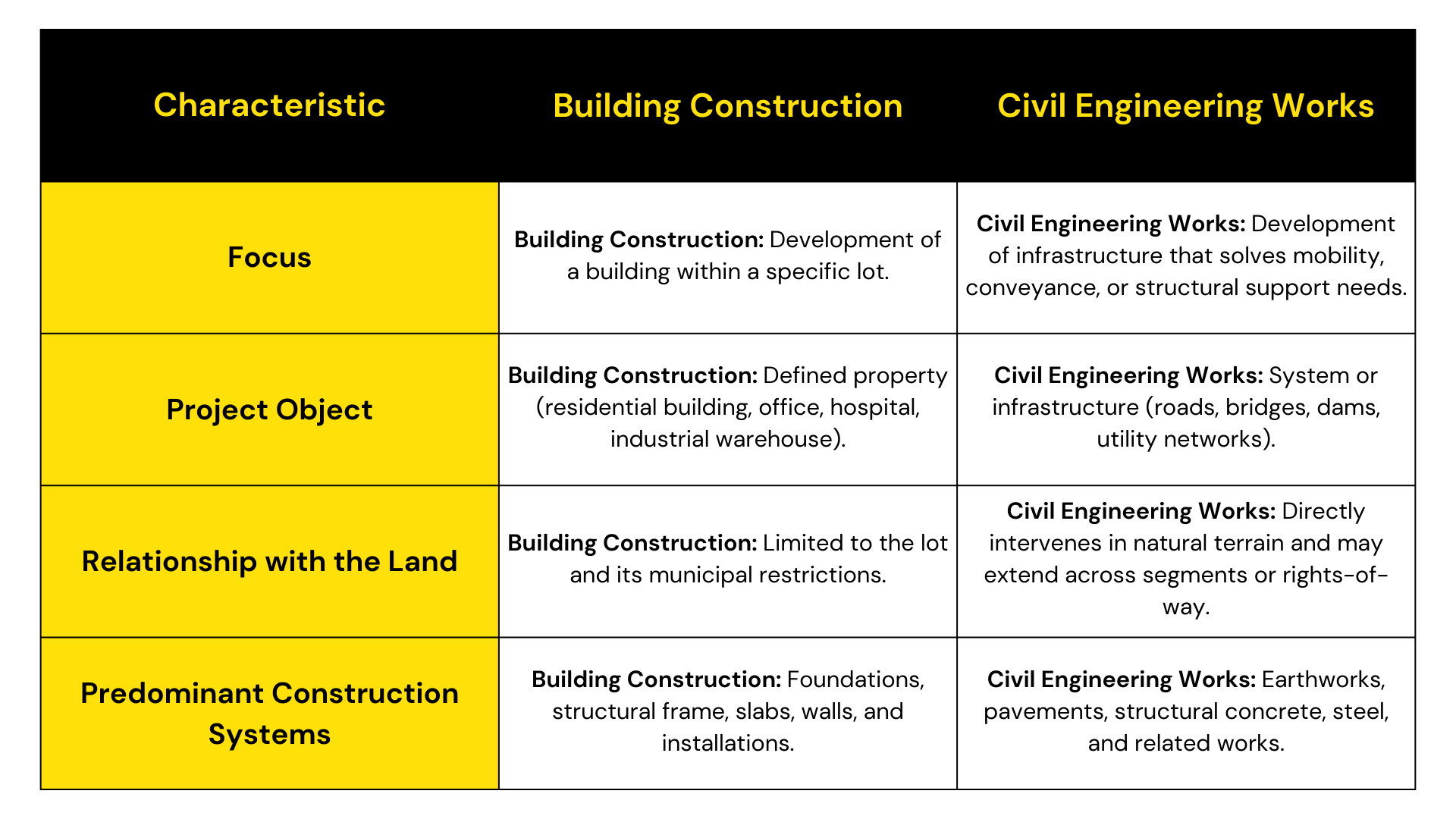
Focus: Development of a building within a defined lot, prioritizing layout, structure, and functionality in compliance with construction codes and land-use regulations.
Construction systems: Foundations, concrete or steel structures, slabs, walls, façades, and integration of electrical, plumbing, and specialized systems.
Relationship with surroundings: Limited to a specific property, complying with municipal alignments, zoning restrictions, and regulations.
Types of Buildings
- Residential buildings: Single-family homes or multi-family housing such as apartments.
- Commercial buildings: Offices, retail spaces, shopping centers.
- Industrial buildings: Warehouses, industrial facilities, production plants.
- Mixed-use buildings: Projects combining two or more uses (e.g., residential + commercial).
What is Civil Works?
Civil works involve the design and execution of public and/or private infrastructure.These projects are built using civil engineering techniques and are intended to support, convey, contain, or enable transportation, hydraulic, energy, or urban systems—such as roads, bridges, dams, and water and drainage networks.
They are characterized by multi-disciplinary coordination, management of simultaneous work fronts, and strict control of schedule, cost, and quality. In this context, digital tools such as Buildpeer, provide activity traceability, physical progress tracking, and field incident documentation, strengthening technical project management at every stage.
Key Characteristics of Civil Works
Focus: Execution of infrastructure such as roads, bridges, water networks, drainage systems, and urban works, prioritizing structural capacity and operational performance.
Construction systems: Earthworks, cuts and fills, subgrades, pavements, structural concrete, reinforcing steel, hydraulic or retaining structures.
Relationship with surroundings: Direct intervention on natural terrain, requiring topography, soil mechanics, environmental impact studies, and in some cases right-of-way approvals.
Types of Civil Works
- Road infrastructure: Highways, urban roads, connectivity works, modernization projects.
- Hydraulic works: Dams, irrigation canals, drainage systems.
- Railway works: Infrastructure for trains and metro systems.
Differences between building construction and civil works
Among its main differences are the following:
- Purpose and functionality
Building projects provide habitable or commercial/industrial spaces.Civil works improve regional infrastructure such as roads, bridges, and water networks.
- Type of buildings and end user
In building projects, the end user is an individual or company using the space.In civil works, the end user is the general public, as they provide public services.
- Applicable regulations
Building projects typically focus on municipal building codes, zoning, structural compliance, safety, and accessibility regulations.Civil works may require environmental impact approvals, right-of-way permits, infrastructure concessions, and sector-specific technical standards.
- Professionals and necessary training
Both require multidisciplinary coordination. The difference lies in which disciplines predominate in each project type.
Permits and licenses for building construction and civil works
Requirements for civil works
Civil works require specific permits related to land use planning, environmental impact and structural safety. In addition, they must be approved by local authorities and comply with urban planning and transport regulations.
Requirements for buildings
Civil works require building permits, habitability licenses, and compliance with safety and energy efficiency regulations. It is also essential to have documentation such as architectural plans. Learn how to control versions and avoid costly mistakes when working with drawings [here].
Practical examples of building and civil engineering
Some examples of building They are:
- The construction of luxury apartments.
- Corporate office buildings.
On the other hand, examples of civil works include:
- The construction of a new highway.
- Sanitation and drainage projects in urban areas.
Comparative table: Building vs Civil Works
Frequently Asked Questions
What is building construction and civil works?
Building construction focuses on the creation of buildings for residential or commercial use, while civil works includes public and private infrastructure projects.
What is considered civil work?
Civil works are projects such as the construction of bridges, roads, and public service networks.
What is a building project?
Building work is any construction intended to provide living space or commercial use.
Conclusion
Building construction and civil works belong to the same sector, but they respond to different technical logics. The first is developed as a property within a specific property; the second as an infrastructure that interacts directly with the land and the territorial environment. The difference is not in which profession participates, but rather in the system that is designed, the scope of the project and the technical framework that regulates it.
In both cases, the outcome depends on the quality of the executive project, on regulatory compliance and, especially, on an adequate allocation of responsibilities to maintain control of progress, costs and execution in the field. When these elements are not clearly defined, the problems we addressed in the article on common mistakes in construction: rework, interference, documentary disorder and reactive decisions.
That's where management becomes decisive. Both in building and civil engineering, tools such as Buildpeer they help to keep the traceability of activities, centralize information and provide real monitoring of the project, reducing precisely those operational errors that impact time and budget.




.svg)
.png)


